
Search This Supplers Products:Power amplifierfp10000q amplifierfp20000q amplifierwireless microphoneaudio processoraudio mixer
- Home
- About us
- Products
- FP POWER AMPLIFIER
- DSP POWER AMPLIFIER
- SR POWER AMPLIFIER
- 1U 4 ohms DIGITAL AMPLIFIER
- 1U 2 ohms DIGITAL AMPLIFIER
- 2 ohms Digital Amplifier V2.0
- AMPLIFIER MODULE
- LINE ARRAY SPEAKER
- SUBWOOFER SPEAKER
- POINT SOURCE SPEAKER
- COAXIAL SPEAKER
- MONITOR SPEAKER
- COLUMN SPEAKER
- AUDIO PROCESSOR
- MICROPHONE
- POWER DISTRIBUTOR
- ACCESSORIES
- Faqs
- News
- Certificate
- Contact us
Sinbosen's latest upgraded FP and D series amplifiers with stand-up versions
time2025/12/02

- Sinbosen's latest upgraded FP and D series amplifiers with stand-up versions
Why Upgrade to the Rack-Mounted Version?
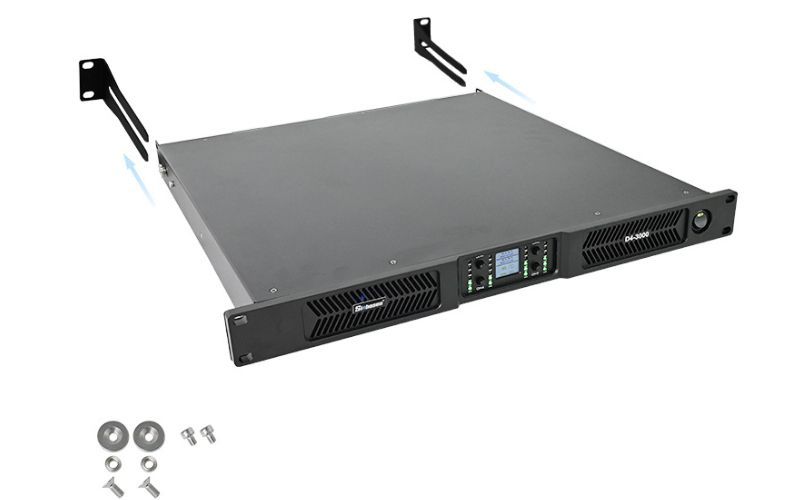
Preventing Accidental Movement or Drops: Stage environments are complex, with frequent personnel movement, and equipment may be bumped. Being secured within the rack prevents the amplifier from being pushed over, pulled, or accidentally slipping off the rack, avoiding equipment damage and personal injury.
Shock Resistance and Stability: When moving racks (e.g., during touring transport) or during performances with strong vibrations (e.g., low-frequency sound pressure levels), the fixed amplifier will not bounce or shift within the rack, ensuring a more reliable connection.
Overall Mobility: For touring or mobile performances, all core equipment is fixed in one or a few racks. Upon arrival at the venue, only the rack's main input/output and power cables need to be connected for rapid system setup, significantly reducing the time spent moving, wiring, and debugging individual devices.
System Integration: The amplifier and its driven speaker processors, crossovers, and other equipment can be tightly integrated, minimizing signal paths and achieving a high degree of system integration.
Protecting Interfaces and Reducing Stress: After the equipment is secured, the connectors for power cables, speaker cables, and signal cables connected to the amplifier's rear panel will receive better support. Cabinet cable management prevents cable weight from directly draping the interfaces, preventing them from loosening or being damaged due to prolonged stress.

Disadvantages of not using brackets/not securing the equipment:
●Stacked equipment leads to poor heat dissipation and a higher risk of overheating and damage.
●Cluttered cables increase the risk of incorrect connections and compromise safety.
●Inconvenient transportation and slow system setup.
●Unprofessional appearance and potential safety hazards.
Benefits of using brackets and mounting in a server rack:
●Safety: Stable equipment, safe personnel, and reliable connections.
●Efficiency: Rapid deployment, easy management, and optimized heat dissipation.
●Professionalism: Clean appearance, standardized system, and easy maintenance.